PLAYBOOK · CHF 49
The AI Delivery Playbook
A short guide and eight editable templates for turning an AI idea into a clear plan, a safe first release, and a rollout people can use.
Eight practical steps
- 01
Describe the problem
Name the user, what is difficult today, what the AI should do, and where it must stop.
- 02
Compare your options
Choose the idea with useful value, workable data, manageable risk, and a realistic path into the business.
- 03
Define what it must do
Write clear behaviour, a way to test it, and the response when the software falls short.
- 04
Check data and risk
Decide who owns privacy, quality, security, human review, and ongoing support.
- 05
Test with fixed examples
Agree on example cases and expected results before the team judges a release.
- 06
Plan the rollout
Prepare pilot users, training, feedback, support, and a safe way to stop.
- 07
Measure the result
Connect the software to a process change and a business result the owner can track.
- 08
Set owners and release rules
Make each decision, responsibility, and release condition visible to the team.
See the actual pages
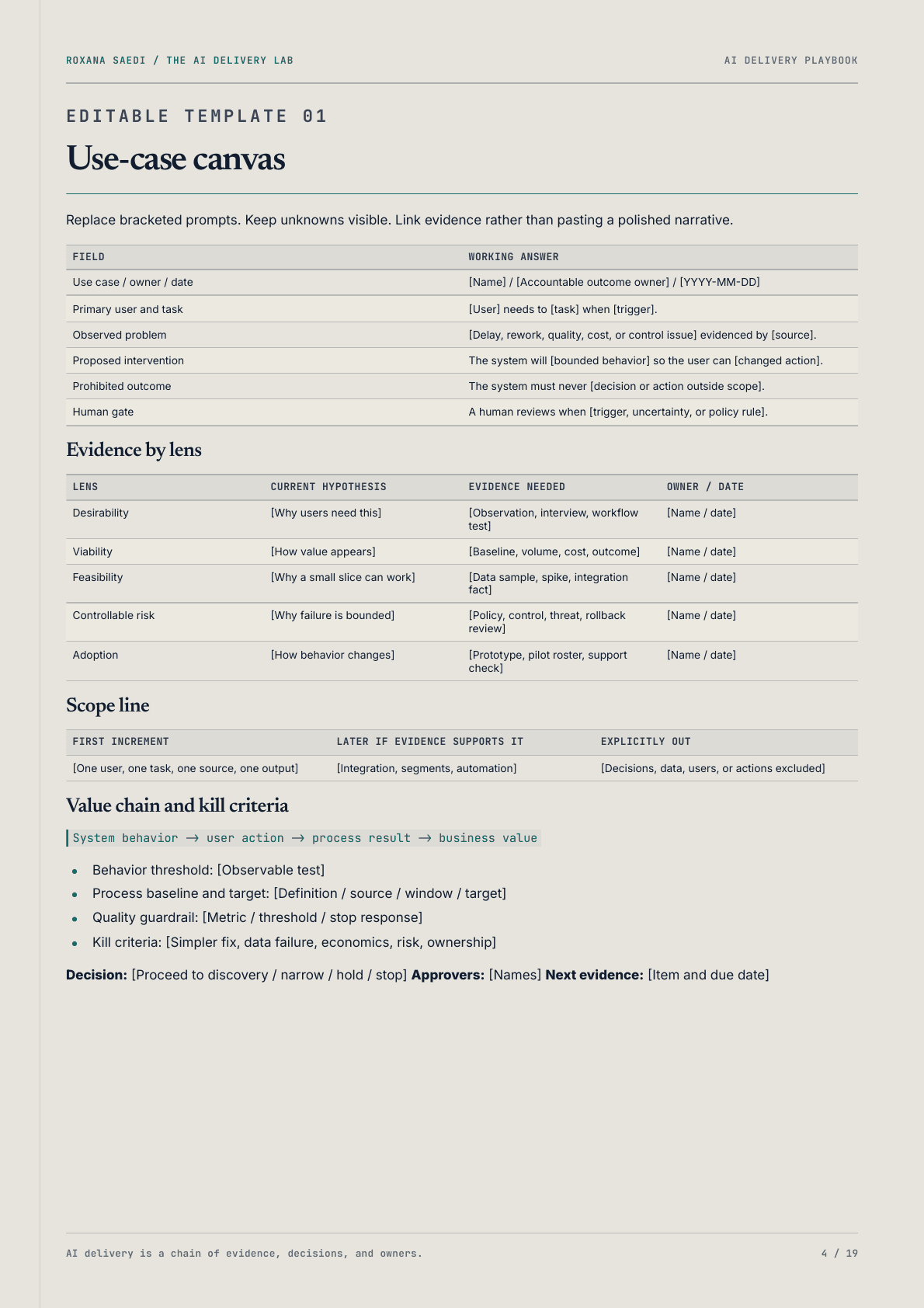
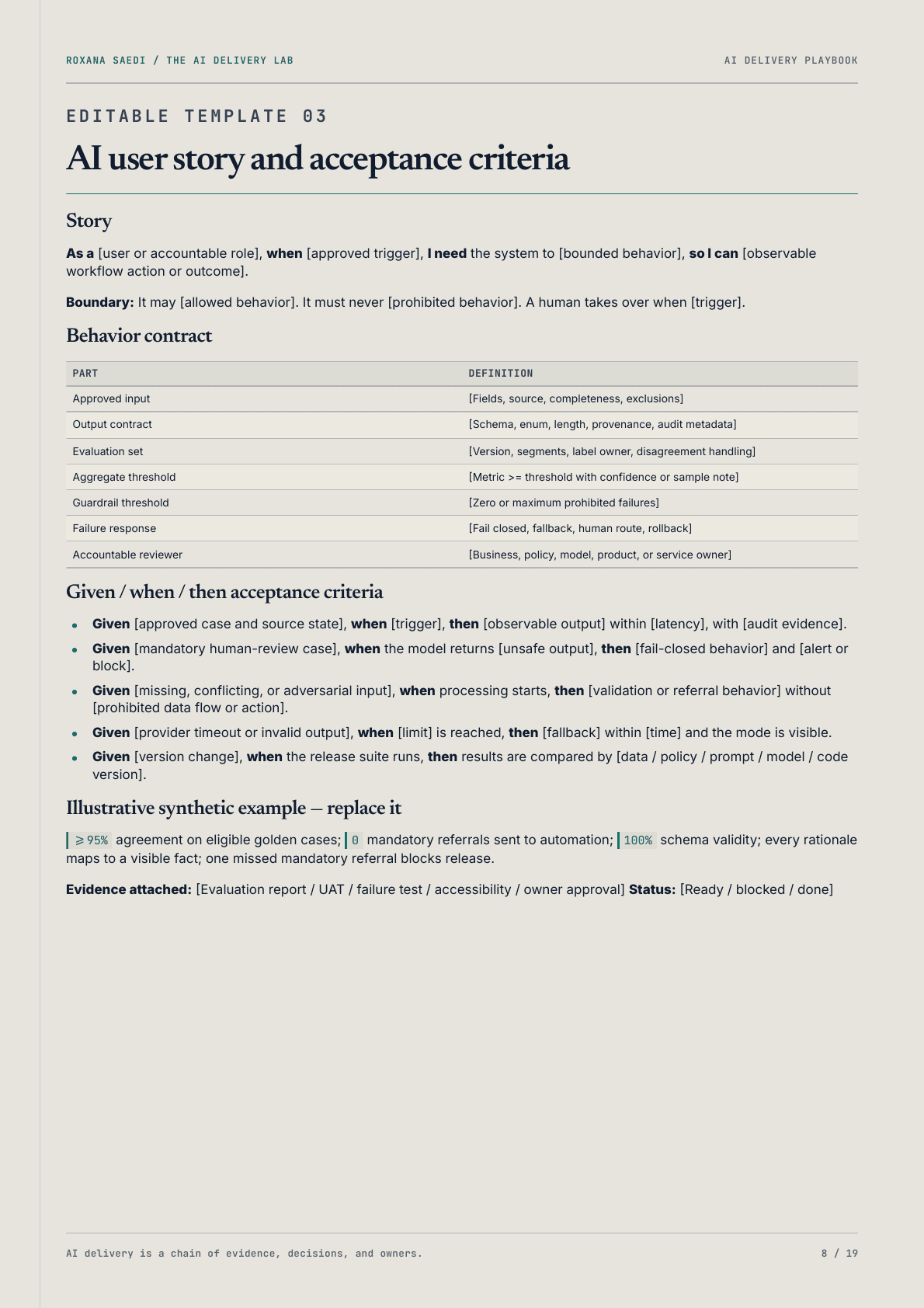
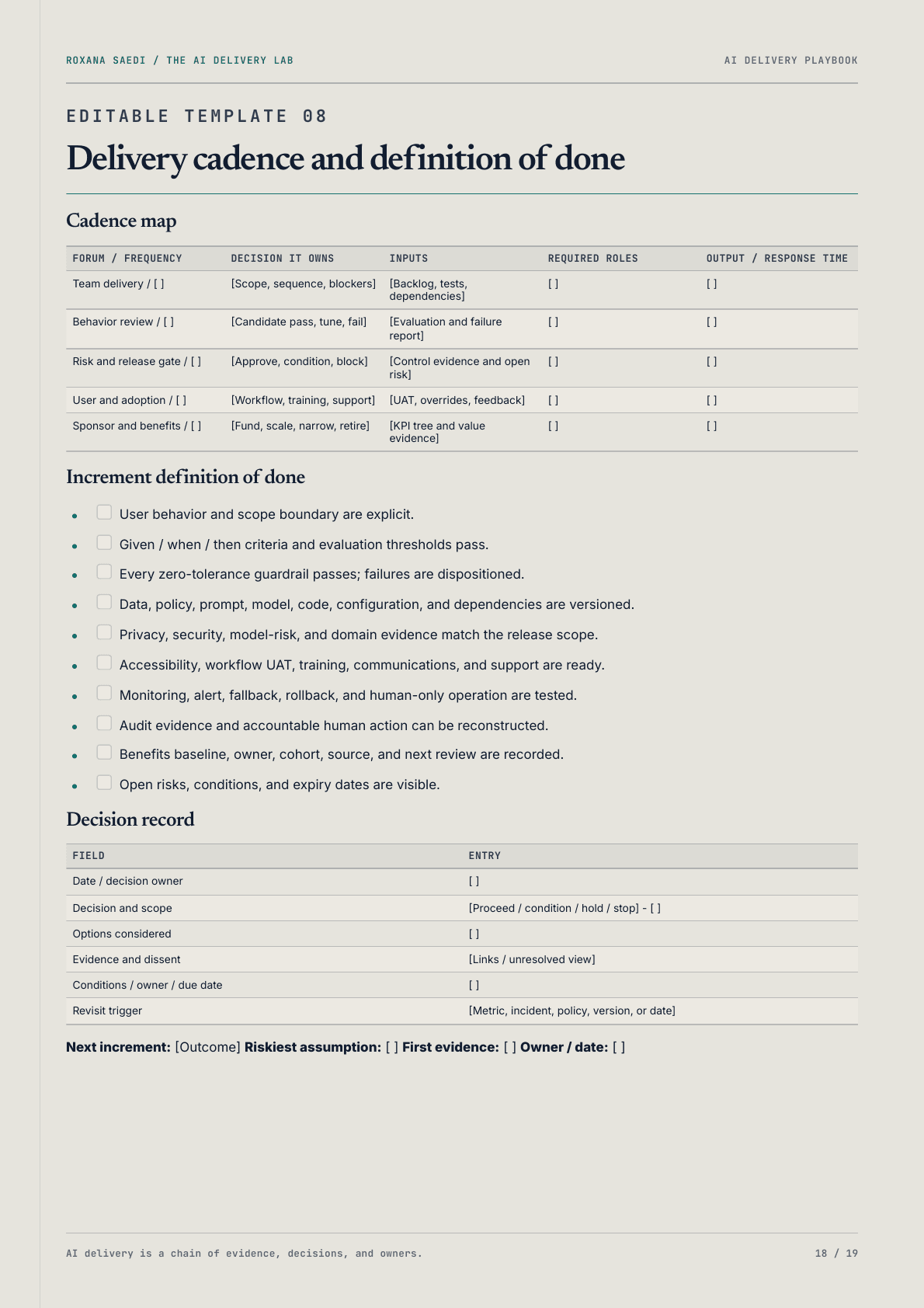
Who it is for
The playbook is for people coordinating an AI project across business, product, technology, risk, and operations. You do not need an engineering background. Specialists still own their technical and control decisions.
Questions before you buy
Can I use it with my team’s current way of working?
Yes. The templates capture decisions and responsibilities. They do not require a new meeting structure or project method.
Is it only for insurance?
No. Insurance is the worked example. The templates suit any focused AI project with a clear user, process, risk boundary, and intended result.
What files do I receive?
One 19-page PDF guide and a ZIP containing eight editable Markdown templates.
Give the next AI project a clear plan.
Keep the decisions, owners, tests, and rollout steps in one place.